
Can a Relationship Survive Addiction? How Rehab Helps Repair the Damage
Many relationships do survive addiction. Survival isn’t automatic, though, and it doesn’t mean staying together at any cost. The couples who come through it usually have three things in common: the partner with the substance use disorder gets real treatment, both partners get support, and the relationship becomes part of the treatment plan rather than something left until later. Where one partner refuses help, or where there is ongoing violence, the picture is very different, and safety matters more than keeping the relationship together.
This guide was updated in November 2026. It covers what research says about addiction and relationship survival, whether rehab can repair a damaged relationship, what the first year of recovery is like for partners, and how to think through the question of staying or leaving honestly.
What the research says about addiction and relationships
The best data on relationship survival comes from large population studies, not small clinic samples. Two stand out.
A Norwegian study from the HUNT health survey followed 19,827 couples for about 15 years. Heavy drinking was linked to a higher risk of divorce. Couples where neither partner drank heavily had a lower divorce risk than couples where one partner did, and couples where both partners drank heavily did no better than mismatched couples. In plain terms, heavy drinking strains a relationship, and sharing the habit doesn’t protect it.
A Swedish registry study of about 942,000 people, discussed in an American Journal of Psychiatry commentary, found the link works in both directions. Divorce was followed by a six- to seven-fold rise in the risk of a first alcohol use disorder diagnosis, and the authors note that the data also fit alcohol use disorder as a cause of divorce.
These studies describe risk across populations. They don’t predict what will happen to any one couple. They are also a reason for hope: if addiction is one of the main pressures on a relationship, treating the addiction takes away one of the main threats to it.
Two things are worth keeping in mind from the start. First, addiction is a chronic, treatable condition. The National Institute on Drug Abuse reports that relapse rates for substance use disorders (about 40 to 60 percent) are similar to those for hypertension and asthma. A relapse is a signal to adjust treatment. It doesn’t prove the relationship has failed. Second, the partner without the addiction usually needs care too. Months or years of worry, broken promises and taking on extra responsibility take a real toll.
How addiction damages a relationship
Couples describe the damage in strikingly similar ways, and naming it is the first step in repairing it.
- Trust erodes first. Hidden spending, lies about where someone has been, and broken promises teach the other partner that words can’t be relied on. Rebuilding that takes consistent action over time, which this guide on rebuilding trust after addiction covers step by step.
- Communication becomes defensive. Conversations turn into accusations and denials, or stop altogether because every topic feels dangerous.
- Roles shift. The non-using partner often takes over the finances, parenting and household decisions and starts covering for the other person. Over time this can turn into codependent patterns that are hard to undo.
- Money and intimacy suffer. Debt, job loss and secrecy about money are common, and so is emotional and physical distance.
- Children feel it. Even very young children notice tension, unpredictability and the absence of a parent who is physically present but emotionally gone.
None of these patterns is permanent. Each one is something treatment can work on directly.
Can rehab save a damaged relationship?
Rehab can create the conditions a relationship needs to heal, but it can’t do the healing on its own. Treatment for a substance use disorder is built around the person’s own recovery: medical detox when it’s needed, individual therapy, group work, medications for alcohol or opioid use disorder where appropriate, and relapse prevention. That individual recovery is the foundation, because a relationship can’t stabilize while active use continues.
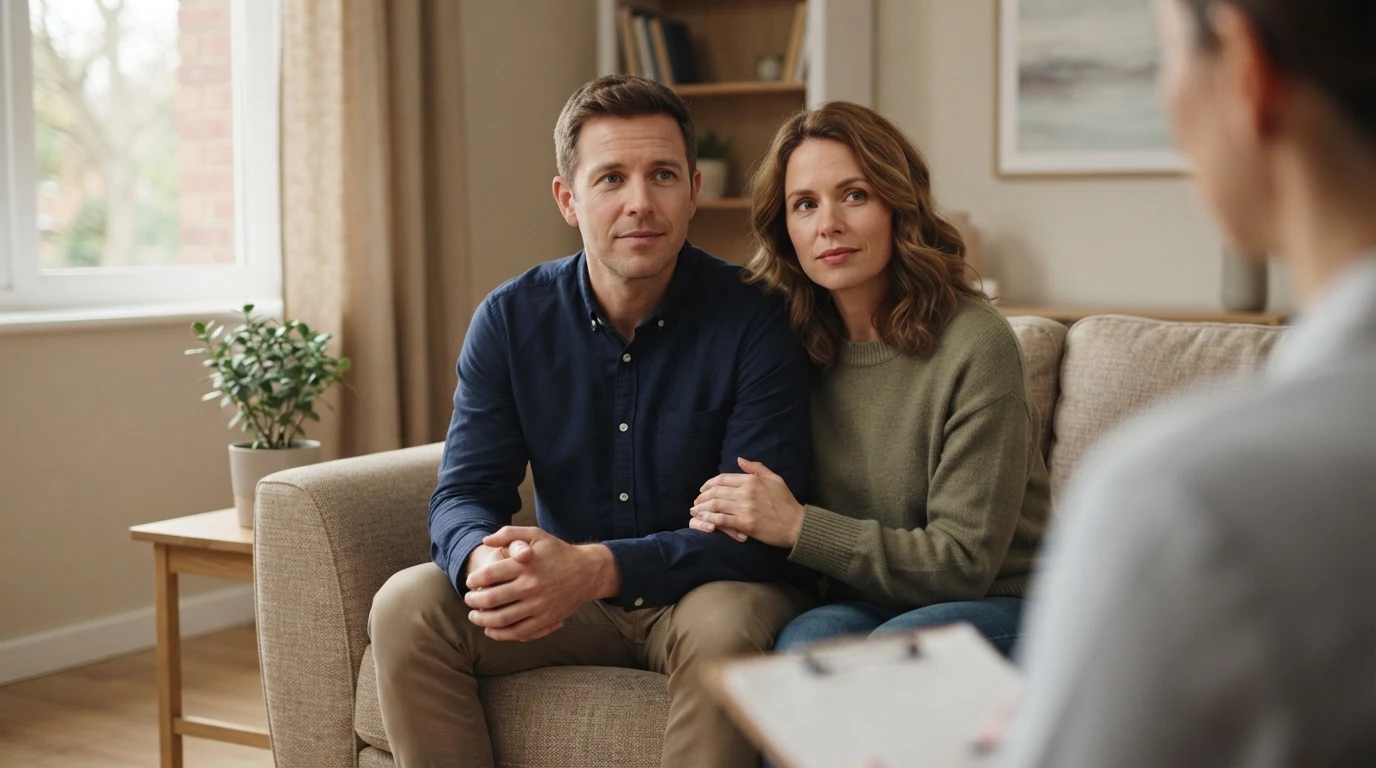
Relationship repair is a separate process that goes alongside it. The strongest evidence is for behavioral couples therapy (BCT). A review in the NIDA journal Science & Practice Perspectives found that patients in BCT consistently reported greater reductions in substance use than patients who received only individual counseling. Couples in BCT also reported higher relationship satisfaction and improvements in family functioning, including less intimate partner violence. In one randomized trial described in that review, about 50 percent of men who received BCT stayed abstinent from alcohol and other drugs, compared with 30 percent in individual treatment.
BCT usually includes a daily “recovery contract” in which the partner in treatment states an intention to stay sober and the other partner acknowledges it without arguing. It also includes structured communication practice and planning shared activities that don’t involve substances. The same review notes that BCT is not appropriate for couples with a history of severe physical aggression. In those cases, individual safety planning comes first.
This is why programs that combine individual treatment with joint sessions are worth considering when both partners are committed. Couples therapy during rehab can begin while one or both partners are in residential or outpatient care. Broader family therapy is described in SAMHSA’s TIP 39 on substance use disorder treatment and family therapy.
What tends to separate couples who make it
This isn’t a test that predicts success. It’s a summary of what clinicians and research tend to see in relationships that recover.
- The person with the addiction is in treatment for their own sake. Recovery that depends on a partner’s ultimatum is fragile. Recovery the person owns tends to last longer.
- Both partners get support. The non-using partner has their own counselor, support group or family program, not just a seat in the other person’s sessions.
- The relationship is safe. There is no physical violence, threats or coercive control. Without safety, couples work can make things worse.
- Accountability doesn’t turn into surveillance. Couples agree on specific, time-limited transparency, such as check-ins or shared access to finances, so trust can be rebuilt without one partner policing the other.
- There is a written plan for relapse. Couples who have agreed in advance what happens if use returns respond faster and with less blame. A couples relapse prevention plan gives that structure.
- Underlying problems are treated. Depression, anxiety, trauma and conflicts that existed before the addiction don’t disappear with sobriety. Integrated treatment for co-occurring conditions makes a difference.
- Expectations about time are realistic. Repair follows its own timeline, which is different for every couple. Feeling disappointed at six weeks is normal and doesn’t mean the relationship is failing.
What the first year of recovery can feel like for a couple
Many couples are surprised to find early recovery harder than they expected. During active addiction everything was organized around the crisis. Once it ends, problems that were buried come to the surface, and the partner who held everything together may feel resentful, exhausted or unsure of their role. The partner in recovery may feel watched or judged even while working hard.
This stage is normal, and it’s exactly where couples counseling, aftercare and peer support help most. Keeping up outpatient care or an aftercare program, going to support groups, and holding regular check-ins give the relationship structure while new habits form.
Supporting a partner without enabling
Support means encouraging treatment, noticing progress and protecting your own health. Enabling means removing the consequences of use, for example by making excuses to an employer, covering debts or keeping secrets from family. The line isn’t always obvious, and this guide on enabling vs. supporting a partner with an addiction works through common examples.
If your partner isn’t ready for treatment, Community Reinforcement and Family Training (CRAFT) is an evidence-based approach that teaches family members how to encourage treatment entry while reducing conflict.
When survival isn’t the right goal
The question isn’t always “How do we save this?” Sometimes it’s “Is it safe and healthy to stay?” Leaving may be the right choice, at least for now, when any of these apply:
- There is physical violence, threats, sexual coercion or controlling behavior.
- Your partner consistently refuses any form of help, and the harm to you or your children keeps growing.
- Your own physical or mental health is declining despite getting support.
- You’re staying mainly out of fear, guilt or financial pressure rather than hope based on real change.
Leaving doesn’t mean you’ve stopped caring, and a separation doesn’t have to be permanent. If you’re weighing that decision, this guide on what to reflect on before breaking up with a partner with addiction walks through it.
If you’re in danger, call 911. The National Domestic Violence Hotline is available 24/7 at 1-800-799-7233 or by texting START to 88788. If you or your partner is thinking about suicide, call or text the 988 Suicide & Crisis Lifeline.
Paying for treatment that includes the relationship
Under the Affordable Care Act, most individual and small-group plans must cover substance use disorder treatment as an essential health benefit. Federal parity law requires that it not be covered more restrictively than medical care. Coverage for joint couples sessions varies by plan and usually depends on the sessions being part of the treatment for a diagnosed condition. Before admission, it helps to verify your insurance for both partners. For public options, use FindTreatment.gov or call the free, confidential SAMHSA National Helpline at 1-800-662-4357.
Frequently asked questions
Can a relationship survive addiction?
Yes, many do. Survival is most likely when the partner with the addiction engages in treatment, both partners get support, and the relationship is safe. Large studies show heavy drinking raises divorce risk, which is why treating the addiction matters so much for the relationship.
Can rehab save a damaged relationship?
Rehab treats the substance use disorder, which is the foundation for any repair. The relationship usually needs its own work as well, such as behavioral couples therapy, family sessions and aftercare. Rehab can’t guarantee a relationship will last, but it removes one of the biggest threats to it.
Does couples therapy work for addiction?
Behavioral couples therapy has the strongest evidence. Research reviewed by NIDA found greater reductions in substance use and better relationship satisfaction than individual counseling alone, along with less partner violence. It isn’t recommended where there has been severe physical aggression.
How long does it take to repair a relationship after addiction?
There is no standard timeline. Trust usually comes back gradually through consistent behavior over many months, and progress is rarely a straight line. Ongoing counseling and aftercare tend to help couples keep going through the hard stretches.
Should I stay in a relationship with someone who has an addiction?
Only you can decide. Consider your safety, whether your partner is getting help, the effect on any children, and your own health. Talking it through with a counselor of your own can make the choice clearer.
What if only one of us wants help?
One partner can start treatment alone. The other partner can get support through counseling, family programs or approaches like CRAFT, which helps family members encourage a reluctant loved one to enter treatment.
Can a relationship survive a relapse?
Often, yes. NIDA reports relapse rates of 40 to 60 percent for substance use disorders, similar to other chronic illnesses. A relapse plan agreed in advance helps a couple respond quickly and adjust treatment instead of treating the relapse as the end.
Does insurance cover couples therapy during rehab?
It depends on the plan. Substance use disorder treatment is an essential health benefit under the ACA. Joint sessions are often covered when they’re part of a diagnosed partner’s treatment plan, so it’s worth verifying benefits before admission.
Taking the next step
Addiction puts real strain on a relationship, but it doesn’t have to end it. Couples Rehabs helps partners find programs where each person’s recovery and the relationship are treated together, with individual care, evidence-based couples therapy and aftercare built in. Couples who want to explore their options can contact the Couples Rehabs admissions team for a confidential conversation and an insurance check.
Recent Comments