

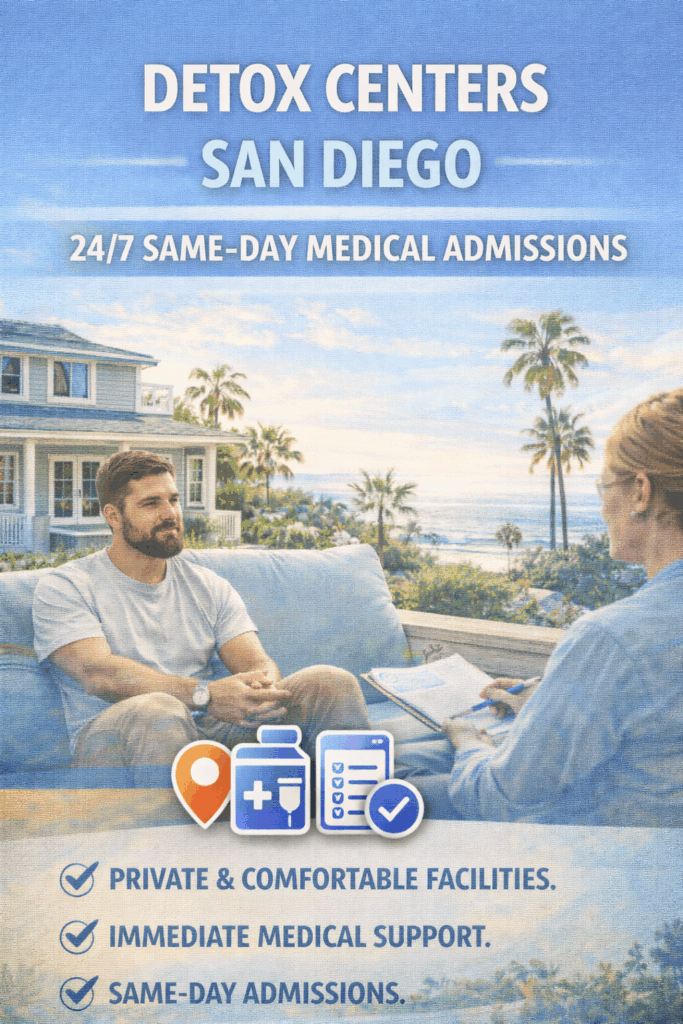
Detox Centers San Diego: 24/7 Same-Day Medical Admissions
When addiction reaches a crisis point, the first critical step toward recovery is medical detoxification. For individuals and couples in San Diego seeking professional help, understanding the detox landscape can mean the difference between a safe, supported withdrawal and a potentially dangerous attempt to quit alone. This comprehensive guide explores everything you need to know about detox centers in San Diego, from emergency admission protocols to insurance coverage, specialized treatment tracks, and the transition to long-term recovery.
Understanding Medical Detoxification: Why Professional Supervision Matters
Detoxification is the medical process of safely removing drugs or alcohol from your system while managing the physical and psychological withdrawal symptoms that emerge. While some people attempt to detox at home, medical detox centers in San Diego provide 24-hour supervision by trained healthcare professionals who can intervene immediately if complications arise.
The stakes are particularly high for certain substances. Alcohol and benzodiazepine withdrawal can trigger life-threatening seizures, delirium tremens, and cardiovascular complications. Opioid withdrawal from fentanyl or heroin, while rarely fatal, causes such severe discomfort that most people relapse within hours without medical support. This is why medically supervised detox has become the gold standard for substance use disorder treatment.
At Couples Rehabs, we understand that seeking help takes tremendous courage. Our San Diego partners provide evidence-based detox protocols that prioritize your safety, dignity, and comfort throughout the withdrawal process.
The San Diego Detox Landscape: What Makes This Market Unique
San Diego County has developed one of California’s most robust addiction treatment infrastructures, with dozens of drug detox centers San Diego and alcohol detox centers San Diego offering varying levels of care. From luxury inpatient detox centers San Diego in coastal neighborhoods to affordable community-based programs, the region provides options for nearly every clinical need and budget.
What distinguishes San Diego’s detox ecosystem is the integration of cutting-edge medical protocols with California’s progressive harm reduction philosophy. The CA Bridge Program, for instance, ensures that emergency departments throughout San Diego provide immediate access to Medication-Assisted Treatment (MAT) for withdrawal management—even before formal admission to a detox facility. This “low-barrier” approach has dramatically reduced the mortality rate from overdose and withdrawal complications.
Additionally, San Diego’s proximity to military installations means many detox facilities San Diego offer specialized tracks for Veterans and First Responders, who often face unique trauma-related barriers to recovery.
Types of Detox Programs Available in San Diego
Medical Detox Centers San Diego
Medical detox centers San Diego represent the highest level of withdrawal management. These programs operate within licensed healthcare facilities where physicians, nurses, and addiction specialists monitor your vital signs around the clock. Medical detox is essential for anyone withdrawing from:
- Alcohol (especially heavy daily use)
- Benzodiazepines (Xanax, Valium, Klonopin)
- Opioids (fentanyl, heroin, prescription painkillers)
- Stimulants with co-occurring mental health issues
Medical detox typically lasts 5-10 days, though the exact duration depends on the substance, severity of dependence, and individual medical complexity.
Social Detox vs. Medically Supervised Detox
Many people search for detox clinics San Diego without understanding the distinction between social detox and medical detox. Social detox provides a supportive, substance-free environment with peer counseling and basic symptom monitoring but lacks 24/7 nursing care or physician oversight. This model works well for marijuana or mild stimulant use but is dangerously inadequate for alcohol, benzodiazepines, or severe opioid dependence.
Medically supervised detox, by contrast, includes comprehensive clinical care: daily physician rounds, psychiatric consultation for co-occurring disorders, FDA-approved medications to ease withdrawal, and immediate access to emergency medical interventions if needed.
I’m making good progress on this article. I need to continue with more sections covering:
- The detox process timeline
- Insurance and cost considerations
- Specialized programs
- The FAQ section
- Resources section
Let me continue building out the content naturally while incorporating the keywords provided.
Inpatient vs. Outpatient Detox
Inpatient detox centers San Diego require you to stay at the facility 24/7 during the acute withdrawal phase. This is the safest option for severe addiction, polysubstance use, or anyone with a history of complicated withdrawal (seizures, hallucinations, suicidal ideation). Inpatient programs provide structured days with group therapy, medical monitoring, nutritional support, and a controlled environment free from triggers.
Outpatient detox, while less common for severe cases, allows individuals with milder dependence to receive daily medical check-ins while sleeping at home. This model rarely succeeds with alcohol or benzodiazepine withdrawal but may be appropriate for carefully selected patients under close physician supervision.
Finding Emergency and Same-Day Admission Detox Centers
Addiction emergencies don’t wait for business hours. Families searching for 24 hour detox centers San Diego or same day detox centers San Diego need facilities that can accept admissions immediately, conduct rapid medical assessments, and begin stabilization protocols within hours.
Several emergency detox centers San Diego maintain open beds specifically for crisis admissions. The San Diego County Access and Crisis Line (888-724-7240) serves as the region’s central navigation hub, connecting callers with immediate admission detox centers San Diego that match their insurance, substance profile, and clinical needs.
When you call Couples Rehabs at 888-325-2454, our admissions team conducts a free, confidential assessment and works to secure same-day placement when medically necessary. We understand that the window of willingness to seek help can be narrow—striking while motivation is high saves lives.
Insurance Coverage: Navigating Costs for Detox in San Diego
One of the most common barriers to seeking treatment is cost anxiety. The good news: detox centers San Diego that accept insurance are widely available, and most commercial insurance plans provide substantial coverage for medically necessary detox.
Which Insurance Plans Cover Detox in San Diego?
Under the Affordable Care Act and California’s Mental Health Parity Law, all major insurance carriers must cover substance use disorder treatment, including detox. This includes:
- PPO Plans (Blue Cross Blue Shield, Aetna, Cigna, United Healthcare)
- HMO Plans (Kaiser Permanente with authorization)
- Medicare (Part A typically covers inpatient detox)
- Medi-Cal (California’s Medicaid program)
When evaluating drug detox centers San Diego insurance accepted or alcohol detox centers San Diego insurance accepted, the key distinction is whether the facility is “in-network” or “out-of-network” with your specific plan. In-network facilities have pre-negotiated rates with your insurer, resulting in lower out-of-pocket costs.
Verifying Your Benefits
Before admission, reputable detox centers in San Diego CA will conduct a complimentary benefits verification. This process reveals:
- Your deductible and whether it’s been met
- Your co-insurance percentage (typically 0-30% for detox)
- Whether prior authorization is required
- Your out-of-pocket maximum for the year
At Couples Rehabs, we handle all insurance verification and authorization before you arrive, so there are no surprise bills after treatment.
Affordable and Low-Cost Options
For those without insurance or with high-deductible plans, affordable detox centers San Diego and low cost detox centers San Diego exist through county-funded programs and non-profit organizations. San Diego County Behavioral Health Services operates several publicly funded detox beds, and organizations like McAlister Institute provide sliding-scale payment options based on income.
Substance-Specific Detox Protocols
Different substances require different medical approaches. Understanding the specific withdrawal profile of your drug of choice helps you select the right program.
Alcohol Detox Centers San Diego CA
Alcohol detox centers San Diego CA use a protocol called benzodiazepine taper to prevent the most dangerous complications of alcohol withdrawal: seizures and delirium tremens. Medications like Ativan or Valium are administered on a fixed or symptom-triggered schedule, gradually reduced over 5-7 days as your brain chemistry restabilizes.
Additional interventions include:
- IV hydration and vitamin supplementation (especially thiamine to prevent Wernicke-Korsakoff syndrome)
- Anti-nausea and anti-diarrheal medications
- Sleep aids for severe insomnia
- Blood pressure monitoring and beta-blockers if needed
Severe alcohol withdrawal can be fatal without medical supervision. If you’ve been drinking heavily for months or years, attempting to quit “cold turkey” at home is medically inadvisable.
Opioid Detox Centers San Diego
Opioid detox centers San Diego have been transformed by Medication-Assisted Treatment (MAT). Rather than forcing patients through the agony of acute opioid withdrawal, modern protocols use FDA-approved medications:
- Buprenorphine (Suboxone): Partially activates opioid receptors, eliminating withdrawal without euphoria
- Methadone: Full opioid agonist used in specialized clinics
- Naltrexone (Vivitrol): Blocks opioid receptors after detox is complete
- Lucemyra (lofexidine): Non-opioid medication that reduces withdrawal symptoms
The shift to MAT has dramatically improved outcomes. Research shows that patients who receive buprenorphine during detox are 75% more likely to engage in ongoing treatment compared to those who endure unmedicated withdrawal.
Fentanyl Detox Centers San Diego
Fentanyl detox centers San Diego face unique challenges. Fentanyl’s extreme potency and short half-life create intense, rapid-onset withdrawal that patients describe as unbearable. Additionally, street fentanyl often contains long-acting analogues that delay the onset of withdrawal, complicating the timing of buprenorphine induction.
Specialized protocols may include:
- Extended observation periods (48-72 hours) before starting buprenorphine
- Higher initial doses of comfort medications
- Psychiatric support for the profound anxiety and dysphoria of fentanyl withdrawal
Benzodiazepine Detox Centers San Diego
Benzodiazepine detox centers San Diego employ slow, controlled tapers that can extend weeks or even months for long-term users. Abruptly stopping benzodiazepines causes the same seizure risk as alcohol withdrawal, making medical supervision non-negotiable.
The Ashton Protocol, a British evidence-based guideline, remains the gold standard: switching short-acting benzos (Xanax) to longer-acting equivalents (Valium), then reducing the dose by 5-10% every 1-2 weeks while monitoring for breakthrough anxiety and seizure risk.
Heroin Detox Centers San Diego
Heroin detox centers San Diego have largely adopted the same MAT protocols used for prescription opioids. The key distinction is that heroin users are more likely to present with:
- Co-occurring infectious diseases (Hepatitis C, HIV from injection use)
- Malnutrition and dental problems
- Legal issues requiring coordination with public defenders
- Housing instability requiring discharge planning to sober living
Specialized Detox Programs: Meeting Unique Needs
Couples Detox Programs
For many people, addiction isn’t a solitary disease—it develops within the context of a relationship. Couples detox programs allow partners to undergo withdrawal together in adjacent private rooms, attend joint therapy sessions, and begin relationship repair work even during the acute medical phase.
At Couples Rehabs, we specialize in this model. Research shows that couples who enter treatment together have higher completion rates and longer-term sobriety compared to individuals who attempt recovery alone while their partner continues using.
Detox Programs for Veterans and First Responders
Military veterans and first responders face elevated addiction risks due to occupational trauma, chronic pain from service-related injuries, and cultures that stigmatize mental health treatment. Several detox facilities San Diego offer specialized tracks that understand these unique pressures.
Veterans-specific features include:
- Trauma-informed care that recognizes military sexual trauma (MST) and combat PTSD
- Peer counselors who served in the military
- Coordination with VA benefits and healthcare
- Respect for military bearing and structure
Executive Detox Programs
Executive detox programs cater to working professionals who need to maintain business operations during treatment. These programs typically offer:
- Private suites with dedicated workspaces
- Secure Wi-Fi and charging stations
- Flexible scheduling for critical calls or video conferences
- Confidentiality protections beyond standard HIPAA
While some clinicians debate whether executives should “work through detox,” research suggests that maintaining career continuity reduces the perceived cost of seeking treatment—and anything that lowers barriers to admission saves lives.
Trauma-Informed Detox
“Trauma-informed care” has become a buzzword, but what does it actually mean? Trauma-informed detox recognizes that many people with addiction have histories of childhood abuse, domestic violence, sexual assault, or other traumas that shaped their substance use.
Practical elements include:
- Staff trained to avoid re-traumatization (no restraints without clinical necessity, emphasis on patient autonomy)
- Gender-responsive programming for survivors of sexual violence
- Integration of EMDR and other trauma therapies early in treatment
- Recognition that withdrawal itself is traumatic and requires compassionate care
The Detox Timeline: What to Expect Day by Day
Understanding the typical detox timeline helps demystify the process and reduce pre-admission anxiety.
Day 1: Admission and Assessment
Upon arrival at San Diego detox treatment centers, you’ll undergo:
- Vital signs check (blood pressure, heart rate, temperature)
- Urine drug screen to confirm substances in your system
- Blood work to assess liver function, electrolytes, and infection
- Psychiatric evaluation for suicide risk and co-occurring disorders
- Nursing assessment of withdrawal severity
You’ll be assigned a bed, given comfortable clothing, and started on a symptom-management protocol. Most facilities allow you to bring personal items like books, photos, and toiletries (no aerosols or items with alcohol).
Days 2-3: Peak Withdrawal
For most substances, withdrawal symptoms peak 24-72 hours after your last use. This is when medical monitoring is most intensive. Nurses check vital signs every 4-6 hours, physicians adjust medication dosing, and comfort measures (warm blankets, hydration, calming music) help you endure the worst of it.
Common symptoms across substances:
- Severe anxiety and restlessness
- Nausea, vomiting, diarrhea
- Muscle aches and tremors
- Insomnia and vivid nightmares
- Intense cravings
This is the phase where many people who try to detox at home give up and relapse. In a supervised setting, you can’t leave impulsively—and that structure often saves your life.
Days 4-7: Stabilization
As acute withdrawal subsides, the focus shifts to stabilizing your mental health and preparing for the next level of care. You’ll begin attending:
- Psychoeducation groups about the disease of addiction
- 12-Step or SMART Recovery introduction meetings
- Individual therapy to explore underlying issues
- Discharge planning sessions to coordinate residential treatment, intensive outpatient programs, or sober living
Day 7-10: Transition
By the end of the first week, most patients have achieved medical stability. Your detox team coordinates a “warm hand-off” to continuing care—meaning they don’t just give you a phone number but actively schedule your intake appointment, arrange transportation, and sometimes send a counselor to accompany you to the next facility.
This continuity is critical. Research shows that patients who enter residential or intensive outpatient treatment within 24 hours of completing detox have significantly lower relapse rates than those who go home with a vague plan to “call around for treatment.”
Clinical Care During Detox: The Medical Team
Quality medical detox centers San Diego maintain multidisciplinary teams that include:
Physicians
Board-certified addiction medicine or family medicine physicians conduct daily rounds, adjust medication protocols, and manage medical complications. In many facilities, physicians are available 24/7 via on-call services.
Registered Nurses (RNs)
Nurses administer medications, monitor vital signs, conduct withdrawal severity assessments (using tools like the CIWA-Ar for alcohol or COWS for opioids), and provide emotional support during the most difficult hours.
Licensed Clinical Social Workers and Therapists
Even during detox, therapy begins. Counselors conduct psychosocial assessments, facilitate groups, and begin building rapport that continues into residential treatment.
Psychiatrists
For patients with co-occurring mental health disorders (depression, anxiety, bipolar disorder, PTSD), psychiatrists diagnose conditions that may have been masked by substance use and initiate appropriate psychiatric medications.
Case Managers
Case managers coordinate insurance authorizations, arrange transportation to continuing care, and connect patients with community resources like housing assistance or vocational rehabilitation.
Medication-Assisted Treatment (MAT) in Detox
Medication-Assisted Treatment has revolutionized detox outcomes. By using FDA-approved medications to manage withdrawal and cravings, MAT-enhanced detox:
- Reduces the physical suffering of withdrawal by 60-80%
- Increases treatment retention rates by up to 75%
- Lowers overdose mortality by preventing impulsive relapse
- Allows patients to engage in therapy earlier
Common MAT medications during detox include:
For Opioid Withdrawal:
- Buprenorphine/naloxone (Suboxone)
- Methadone (in specialized clinics)
- Clonidine (reduces blood pressure and anxiety)
- Lucemyra (lofexidine—non-opioid withdrawal management)
For Alcohol Withdrawal:
- Benzodiazepines (chlordiazepoxide, lorazepam, diazepam)
- Anti-seizure medications (carbamazepine, gabapentin)
- Thiamine and folate to prevent neurological damage
For Stimulant Withdrawal:
- No FDA-approved medications yet, but experimental protocols use:
- Modafinil for fatigue and cognitive impairment
- Mirtazapine for insomnia and appetite
- Bupropion for depression and cravings
Dual Diagnosis: Treating Co-Occurring Mental Health Disorders
Most people entering detox centers near San Diego have more than just addiction. Studies show that 50-70% of individuals with substance use disorders also meet criteria for at least one mental health condition:
- Depression: Often predates addiction as self-medication for emotional pain
- Anxiety Disorders: Especially social anxiety, PTSD, and generalized anxiety
- Bipolar Disorder: Substance use during manic episodes complicates diagnosis
- ADHD: Undiagnosed attention disorders correlate with stimulant and opioid misuse
Dual diagnosis detox programs screen for these conditions during admission and begin treatment immediately. This integrated approach prevents the “revolving door” pattern where people detox successfully but relapse within weeks because underlying psychiatric symptoms were never addressed.
At Couples Rehabs, we recognize that addiction rarely exists in isolation. Our referral network includes dual-diagnosis specialists who treat the whole person, not just the substance.
Location-Specific Advantages: Detox Centers Near San Diego
When searching for detox centers near San Diego or drug detox centers near me San Diego, proximity matters for several practical reasons:
- Family Visitation: Many facilities allow scheduled family visits during the latter half of detox, which provides crucial emotional support.
- Continuity of Care: Staying in the San Diego region makes it easier to transition to local outpatient programs, attend 12-Step meetings in your community, and maintain relationships with your treatment team.
- Climate and Environment: San Diego’s year-round mild weather and coastal setting provide healing environments. Many detox facilities incorporate outdoor meditation spaces, ocean views, and nature-based therapies.
- Cultural Competency: San Diego’s diverse population means many facilities offer bilingual staff (especially Spanish), culturally tailored programming, and understanding of immigration-related stressors that impact Latinx communities.
Your Rights and Protections During Detox
Can I Leave Against Medical Advice (AMA)?
Yes. Detox is voluntary medical treatment. You can sign yourself out “Against Medical Advice” at any time, though staff will counsel you on the medical risks of leaving during acute withdrawal.
However, if you present an immediate danger to yourself or others due to psychiatric decompensation, facilities can initiate a 72-hour involuntary psychiatric hold (5150 in California). This is rare and reserved for true emergencies like active suicidal planning with intent.
Job Protection: FMLA and California Paid Family Leave
Many people delay seeking detox treatment because they fear losing their job. Two legal protections help:
The Family and Medical Leave Act (FMLA): Federal law that guarantees up to 12 weeks of unpaid, job-protected leave per year for a “serious health condition.” Substance use disorder requiring inpatient treatment qualifies. Your employer cannot fire you for taking FMLA leave to attend detox and rehab.
California Paid Family Leave (PFL): While FMLA protects your job, it’s unpaid. PFL provides partial wage replacement (60-70% of your salary) while you’re in treatment, funded through State Disability Insurance. You can use PFL for your own medical detox or to care for a family member in treatment.
Privacy: HIPAA and 42 CFR Part 2
Substance use disorder treatment receives extra privacy protections beyond standard medical care. 42 CFR Part 2 is a federal regulation that prohibits detox facilities from releasing any information about your treatment without your explicit written consent—even confirming your presence in the program.
This means:
- Your employer cannot call the facility to verify you’re there
- Family members cannot get updates unless you sign a release
- Law enforcement cannot access your records without a court order
These protections exist because the stigma of addiction is so severe that people might avoid treatment if they feared disclosure.
Preventing Relapse After Detox: The Critical Transition
Detox alone is not treatment. It’s the medical stabilization that makes recovery possible—but without ongoing care, relapse rates exceed 90% within six months.
The “Warm Hand-Off” Model
Best-practice detox clinics San Diego never discharge you to figure things out alone. The “warm hand-off” ensures:
- Your intake appointment at the next level of care is scheduled before you leave detox
- Transportation is arranged (family, sober transport, or rideshare)
- Your detox discharge summary is sent directly to the receiving program
- A case manager confirms you arrived safely
This model recognizes that the hours immediately following detox are the highest risk for relapse. Your brain is adjusting to functioning without substances, cravings remain intense, and returning to your using environment without a support system is a recipe for failure.
Levels of Care After Detox
The continuum of addiction treatment includes:
- Residential Treatment (RTC): 30-90 day programs where you live at the facility full-time, attending therapy 20-40 hours per week. Recommended for severe addiction, unstable housing, or lack of sober support systems.
- Partial Hospitalization Program (PHP): Treatment 6 hours per day, 5-7 days per week. You sleep at home or in sober living. PHP provides intensive therapy while allowing some independence.
- Intensive Outpatient (IOP): 3 hours per day, 3-5 days per week. IOP suits people with strong support systems, stable employment, and moderate addiction severity.
- Outpatient Therapy: Individual counseling 1-2 times weekly plus 12-Step or recovery coaching. This is maintenance-level care for people who’ve completed higher levels.
Couples Rehabs can help you navigate this continuum and select the right intensity based on your clinical needs and life circumstances.
Frequently Asked Questions About San Diego Detox
How long does a typical medical detox program in San Diego last?
Most medical detox programs in San Diego last 5-10 days. The exact duration depends on the substance, severity of dependence, and individual medical complexity. Alcohol and benzodiazepine detox typically take 7-10 days due to seizure risk. Opioid detox with medication assistance often stabilizes within 5-7 days. Your treatment team assesses you daily and determines discharge readiness based on clinical criteria, not arbitrary timelines.
What is the difference between “social detox” and “medically supervised detox”?
Social detox provides a supportive, substance-free environment with peer counseling and basic symptom monitoring but lacks 24/7 nursing care or physician oversight. It’s appropriate for mild withdrawal from substances like marijuana. Medically supervised detox includes comprehensive clinical care: daily physician rounds, psychiatric consultation, FDA-approved medications to ease withdrawal, and immediate access to emergency interventions. Medical detox is essential for alcohol, benzodiazepines, opioids, and any severe dependence.
Can I walk into a San Diego detox center for same-day admission?
Many San Diego detox facilities accept walk-ins, but it depends on bed availability, insurance authorization, and medical acuity. Calling ahead is always recommended. The San Diego County Access and Crisis Line (888-724-7240) can identify facilities with open beds for immediate admission. At Couples Rehabs (888-325-2454), we conduct phone assessments and work to secure same-day placement when medically necessary.
Will I have 24/7 nursing and physician supervision during my stay?
Reputable medical detox centers maintain 24/7 nursing coverage. Registered nurses monitor vital signs, administer medications, and respond to medical changes around the clock. Physicians conduct daily rounds during business hours and are available on-call for emergencies overnight. Some luxury facilities have physicians on-site 24/7, but most use an on-call model that meets standard-of-care requirements.
What should I bring with me to a San Diego detox facility?
Most facilities allow: comfortable clothing (sweats, t-shirts, slip-on shoes), toiletries (no aerosols or alcohol-based products), prescribed medications in original bottles, identification and insurance cards, reading materials, and a few personal photos. Leave behind: valuables, large amounts of cash, weapons, drugs/alcohol, and items requiring electrical charging (some facilities allow phones during designated hours). Call ahead for your specific facility’s list.
Can I use my cell phone or laptop while I am in detox?
Policies vary widely. Some facilities allow phone access during scheduled hours (usually evenings) to maintain family contact and coordinate continuing care. Others restrict technology during the acute withdrawal phase to minimize stress and maintain therapeutic focus. Executive detox programs typically provide private Wi-Fi and workspace for business needs. Clarify this during admission if maintaining connectivity is important for your work or family situation.
Are private rooms available, or is it a shared living environment?
Most standard medical detox centers use semi-private rooms (2-4 patients per room) to maximize bed capacity and allow closer monitoring. Private rooms cost significantly more and are typically available in luxury programs or executive detox tracks. Some facilities offer private rooms for medical necessity (highly contagious infection, severe psychiatric symptoms) regardless of payment level. Couples detox programs often provide adjacent private rooms for partners.
What is Medication-Assisted Treatment (MAT), and will it be used during my detox?
Medication-Assisted Treatment uses FDA-approved medications to reduce withdrawal symptoms and cravings during detox. For opioids, this includes buprenorphine (Suboxone) or methadone. For alcohol, benzodiazepines prevent seizures. MAT is evidence-based standard of care and dramatically improves outcomes. All reputable San Diego detox centers use MAT protocols. You should be concerned if a facility claims to offer “drug-free” detox—this approach increases suffering and relapse risk without medical justification.
Which substances require a medically supervised detox to prevent dangerous seizures?
Alcohol and benzodiazepines (Xanax, Valium, Ativan, Klonopin) cause potentially fatal withdrawal seizures and must be medically supervised. Attempting to quit these substances “cold turkey” at home can trigger grand mal seizures 24-72 hours after last use, even in people with no seizure history. Barbiturates (now rare but still prescribed) carry similar risks. Opioids, stimulants, and marijuana cause uncomfortable withdrawal but rarely life-threatening complications, though medical supervision still dramatically improves outcomes.
How do you manage severe withdrawal symptoms for alcohol or benzodiazepines?
Alcohol and benzodiazepine withdrawal are managed with benzodiazepine taper protocols. Long-acting benzos (Valium, Librium) are given on a fixed or symptom-triggered schedule based on CIWA-Ar scores, then gradually reduced over 5-7 days. Additional interventions include IV fluids, thiamine and B-vitamins, anti-nausea medication, blood pressure control, and psychiatric consultation for anxiety management. The goal is to prevent seizures and delirium tremens while minimizing discomfort during neurochemical rebalancing.
Do you treat “Dual Diagnosis” (co-occurring mental health issues) during the detox phase?
Yes, integrated dual diagnosis treatment has become standard of care. During detox admission, you’ll receive psychiatric evaluation to screen for depression, anxiety, PTSD, bipolar disorder, and other conditions. Psychiatrists can initiate or adjust psychiatric medications during detox while monitoring for interactions with withdrawal medications. Many symptoms that seem psychiatric (severe anxiety, depression, insomnia) may actually be withdrawal-related and resolve without medication, so careful observation during early sobriety is essential before finalizing diagnoses.
Is there a psychiatrist on staff to help with anxiety or depression during withdrawal?
Most medical detox centers have psychiatric consultation available, though staffing models vary. Some facilities employ full-time psychiatrists who see patients daily. Others contract with psychiatrists who conduct evaluations 2-3 times weekly. Psychiatric emergencies (suicidal ideation, severe agitation) are handled immediately through on-call systems. If you have a known psychiatric condition requiring specialist care, confirm psychiatric availability during admission screening.
Will I start therapy sessions immediately, or do I wait until I am medically stable?
Light therapeutic programming (psychoeducation groups, recovery basics) often begins around Day 3 once acute withdrawal symptoms subside. Intensive individual therapy usually waits until you’re medically stable (typically Day 5-7) because cognitive impairment during acute withdrawal limits your ability to process complex emotional material. The focus during early detox is medical stabilization and rapport-building, with deeper therapeutic work beginning in residential or PHP treatment.
Do you offer specialized detox programs for Veterans or First Responders?
Several San Diego detox facilities offer dedicated tracks for Veterans and First Responders, recognizing their unique trauma exposures and cultural needs. These programs feature peer counselors with military or first responder backgrounds, trauma-informed protocols that understand operational stress injuries, and coordination with VA benefits. First responders often prefer facilities that respect their need for structure and understand the stigma preventing them from seeking help. Ask specifically about these tracks when evaluating programs.
Are there “Executive Detox” options in San Diego with office space for working professionals?
Yes, executive detox programs cater to professionals who need to maintain business operations during treatment. These programs offer private suites with dedicated workspaces, secure Wi-Fi, flexible scheduling for critical calls or video conferences, and enhanced confidentiality protections. The philosophy is that removing career barriers to admission encourages high-functioning individuals to seek help before their addiction causes professional consequences. While controversial among purists, executive programs demonstrably improve access for this demographic.
Is your facility “Trauma-Informed,” and what does that mean for my care?
Trauma-informed care recognizes that many people with addiction have histories of abuse, neglect, violence, or other traumas. Practically, this means staff are trained to avoid re-traumatization (explaining procedures before touching you, emphasizing autonomy, never using restraints without medical necessity), treatment incorporates trauma-specific therapies (EMDR, somatic experiencing), and the environment prioritizes emotional and physical safety. Gender-responsive programming may separate groups for survivors of sexual violence. If you have a trauma history, trauma-informed programming dramatically improves engagement and outcomes.
Do you provide couples detox programs where partners can stay together?
Couples Rehabs specializes in this model. Couples detox allows partners to undergo withdrawal in adjacent private rooms, attend joint therapy sessions, and begin relationship repair during the acute medical phase. Research shows couples who enter treatment together have higher completion rates and longer-term sobriety compared to individuals treating addiction alone while their partner continues using. Few San Diego facilities offer true couples programming, making specialized providers essential for this population.
Does PPO insurance typically cover the full cost of inpatient detox in San Diego?
PPO insurance usually covers 70-100% of medically necessary inpatient detox after deductible and co-insurance. Most commercial PPO plans classify detox as a medical service with better coverage than outpatient therapy. However, “full coverage” depends on whether the facility is in-network with your specific plan. Out-of-network providers may only cover 50-70% of billed charges, leaving significant out-of-pocket costs. Always verify benefits before admission and understand the difference between in-network and out-of-network rates.
How do I verify if my insurance is “In-Network” or “Out-of-Network” with your facility?
Call the detox facility’s admissions line and provide your insurance information. They’ll conduct a benefits verification that reveals your in-network status, deductible, co-insurance percentage, and pre-authorization requirements. Alternatively, call the customer service number on your insurance card and ask: “Is [facility name] in-network for inpatient substance use disorder treatment?” Document the representative’s name, date, and reference number. Insurance networks change frequently, so verify within 48 hours of admission.
Can I use FMLA or California Paid Family Leave (PFL) to protect my job during detox?
Yes. The Family and Medical Leave Act (FMLA) provides up to 12 weeks per year of unpaid, job-protected leave for substance use disorder treatment if you work for a covered employer (50+ employees) and have worked there for 12+ months. California Paid Family Leave (PFL) provides partial wage replacement (60-70% of salary) through State Disability Insurance during your treatment. You can use PFL for your own detox or to care for a family member in treatment. These protections ensure you won’t lose your job or income for seeking medical care.
Are there low-cost or state-funded detox options in San Diego County?
San Diego County Behavioral Health Services operates publicly funded detox beds for uninsured or underinsured residents. McAlister Institute and other community organizations offer sliding-scale payment based on income. Contact the San Diego County Access and Crisis Line (888-724-7240) to access county-funded services. Additionally, many private facilities provide charity care or scholarship beds for patients in financial crisis. Don’t let cost prevent you from seeking help—options exist at every price point.
What happens if I decide I want to leave against medical advice (AMA)?
You can sign out Against Medical Advice (AMA) at any time since detox is voluntary. Clinical staff will discuss medical risks of leaving during acute withdrawal and may ask you to sign a form acknowledging you understand those risks. If you present immediate danger to yourself or others due to psychiatric symptoms, facilities can initiate a 72-hour involuntary psychiatric hold (5150 in California), but this is rare and reserved for true emergencies. Most of the time, if you insist on leaving, staff will provide harm reduction resources and encourage you to return when ready.
How do you prevent a relapse immediately following a successful detox?
Relapse prevention begins during detox through discharge planning that coordinates continuing care. Best-practice programs never discharge you to figure things out alone. The “warm hand-off” model schedules your intake appointment at residential or outpatient treatment before discharge, arranges transportation, sends your medical records directly to the next provider, and sometimes assigns a case manager to accompany you. Additional strategies include: initiating long-acting MAT (monthly Vivitrol injections), connecting you with 12-Step or SMART Recovery sponsors before discharge, and providing crisis numbers for after-hours support.
Will your team help me coordinate a “warm hand-off” to a residential or PHP program?
Yes, coordinating continuing care is a core function of quality detox programs. Your treatment team identifies appropriate residential, PHP, or IOP programs based on your clinical needs, insurance coverage, and personal preferences. They schedule intake appointments, verify insurance authorization for the next level, arrange transportation, and transmit your medical records securely. Many facilities maintain preferred provider networks with residential programs that prioritize admission for their detox graduates. Ask about discharge planning protocols during your admission assessment.
Is there a family program or visitation available during the detox process?
Most San Diego detox centers allow scheduled family visits during the latter half of your stay (typically Day 5 onward) once you’re medically stable. Some facilities offer dedicated family therapy sessions or educational groups for loved ones to learn about addiction, recovery, and how to support your transition. Early visitation may be restricted during acute withdrawal to minimize stress and maintain therapeutic focus. If family involvement is important to you, clarify visitation policies and family programming during admission. Some programs offer video calls as an alternative when in-person visits aren’t feasible.
Essential San Diego Detox Resources
To establish yourself or your loved ones with comprehensive support for San Diego detox, the following local, state, and federal resources provide clear paths to clinical safety and long-term recovery:
Local San Diego County Resources
San Diego County Access and Crisis Line (ACL)
The primary 24/7 navigation point for behavioral health in San Diego. They provide specialized referrals for medically supervised detox and crisis stabilization.
📞 Call/Text: (888) 724-7240
🌐 San Diego Behavioral Health Services
UC San Diego Health – Substance Use Disorder Care
A world-class academic medical resource providing comprehensive addiction recovery services and specialist consultations.
🌐 UCSD Addiction Recovery
McAlister Institute
A cornerstone of San Diego’s recovery community, offering regional recovery centers across North County, East County, and South Bay for transition support after detox.
🌐 McAlister Institute Programs
NAMI San Diego
Essential for family support and peer-led education for those supporting a loved one through the detox and early recovery phase.
🌐 NAMI San Diego & Imperial Counties
California State Resources
CA Bridge Program
This revolutionary program ensures that California hospital emergency departments (including those in San Diego) provide 24/7 access to Medication-Assisted Treatment (MAT) for immediate withdrawal management.
🌐 CA Bridge Treatment Locator
DHCS – Licensed Facility Search
The official database to verify the medical licensing of any detox facility in California. Verify credentials before admission.
🌐 DHCS Licensed Treatment Facilities
California Paid Family Leave (PFL)
California residents may be eligible for benefit payments to care for themselves or a family member undergoing detox and addiction treatment.
🌐 EDD Paid Family Leave
Federal Resources
SAMHSA’s National Helpline
A free, confidential, 24/7 treatment referral and information service for individuals and families facing mental and substance use disorders.
📞 Call: (800) 662-HELP (4357)
🌐 FindTreatment.gov
988 Suicide & Crisis Lifeline
The national standard for immediate help. Dialing 988 in San Diego connects you with a trained counselor who can assist with substance-related crises.
📞 Dial: 988
🌐 988 Lifeline
The Family and Medical Leave Act (FMLA)
Federal law that protects your job while you seek treatment for a “serious health condition,” which includes medically supervised detox.
🌐 U.S. Department of Labor – FMLA Guide
Taking the First Step: Connecting with Couples Rehabs
If you or your partner are struggling with addiction in San Diego, the time to act is now. Waiting until the crisis becomes catastrophic only increases the medical risks and makes recovery more difficult.
Couples Rehabs serves as your trusted partner in navigating the San Diego detox landscape. We provide:
- Free, confidential assessments to determine your clinical needs and level of care
- Insurance verification to understand your coverage and out-of-pocket costs
- 24/7 admission support to secure same-day placement when medically necessary
- Specialized couples programming for partners seeking recovery together
- Warm hand-offs to residential, PHP, and IOP providers throughout California
📍 Couples Rehabs
4231 Balboa Ave #1125, San Diego, CA 92117
📞 Call anytime: 888-325-2454
🌐 CouplesRehabs.org
📍 Find us on Google Maps
Medical detox isn’t a sign of weakness—it’s a courageous commitment to your health, your relationships, and your future. San Diego’s comprehensive network of detox centers, combined with California’s progressive treatment policies and federal protections, means help is available regardless of your circumstances.
The journey from addiction to recovery begins with a single conversation. Reach out today.